Dental Implants: A Permanent Solution for Missing Teeth
Missing teeth can affect much more than your appearance. They may make it difficult to chew certain foods, affect your speech, and can gradually impact the way your remaining teeth function. Fortunately, modern dentistry offers several options for replacing missing teeth, and dental implants are one of the most reliable and natural-looking solutions available.
Dental implants are designed to replace the missing tooth from the root upward, providing a stable foundation for a crown, bridge, or other dental restoration.
What Are Dental Implants?
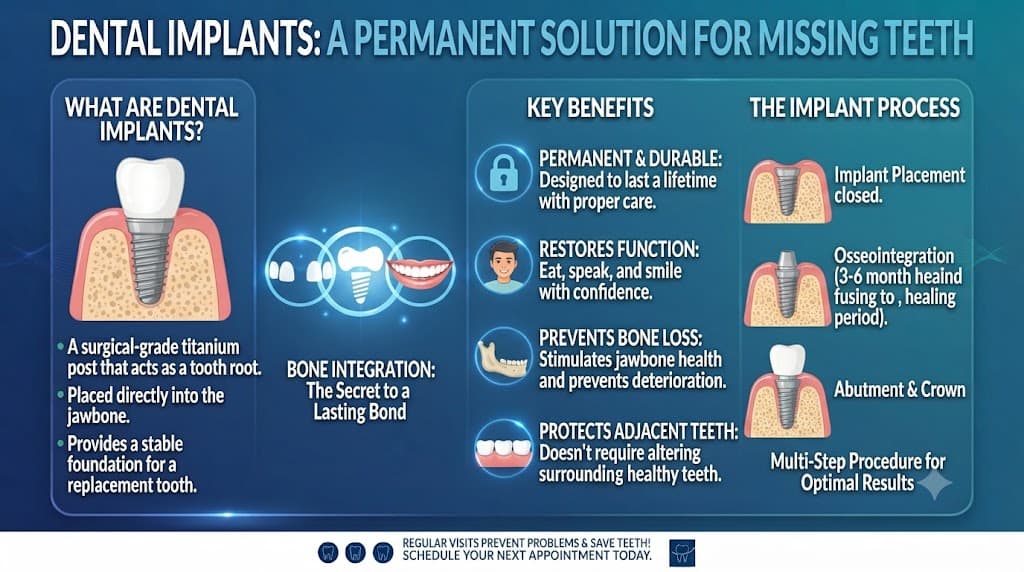
A dental implant is a small post, usually made from a biocompatible material such as titanium, that is surgically placed into the jawbone. As the area heals, the implant can integrate with the surrounding bone and provide support for an artificial tooth.
Once the implant has healed sufficiently, an abutment and custom-made dental crown can be attached. The result is a replacement tooth designed to look and function much like a natural tooth.
Why Choose Dental Implants?
Dental implants offer several potential advantages compared with some traditional tooth-replacement options:
- Natural appearance: Implant-supported crowns can be designed to closely match your surrounding teeth.
- Stable and secure: Implants are anchored in the jawbone, providing a stable foundation for replacement teeth.
- Improved chewing: A well-fitted implant restoration can help restore chewing function.
- Bone support: Implant placement can help maintain the jawbone around the missing-tooth area.
- Long-term option: With appropriate care and regular dental checkups, implants can provide a long-lasting tooth-replacement solution.
What Is the Dental Implant Procedure?
Dental implant treatment is usually completed in several stages. The exact process depends on your oral health, the number of missing teeth, bone condition, and the type of restoration required.
- Initial consultation: Your dentist examines your teeth, gums, and jawbone and may recommend dental imaging to plan the treatment.
- Implant placement: The implant is carefully placed into the jawbone under appropriate anaesthesia.
- Healing period: The implant is given time to integrate with the surrounding bone.
- Abutment placement: Once appropriate healing has occurred, an abutment may be connected to the implant.
- Final restoration: A custom-made crown, bridge, or other restoration is attached to complete the treatment.
Who Can Get Dental Implants?
Dental implants may be suitable for many adults who have one or more missing teeth. However, not everyone is an immediate candidate. Your dentist will consider factors such as jawbone condition, gum health, general health, oral hygiene, and smoking habits before recommending treatment.
If there is not enough suitable bone to support an implant, additional procedures may sometimes be considered before implant placement. Your dentist can explain the available options after a detailed examination.
How Long Do Dental Implants Last?
Dental implants are designed as a long-term tooth-replacement option, but their longevity depends on several factors, including oral hygiene, gum health, lifestyle, regular dental care, and the condition of the implant and surrounding tissues.
Brushing, cleaning between your teeth, attending regular dental checkups, and following your dentist's recommendations can help maintain your implant and surrounding oral tissues.
Dental Implants vs Other Tooth Replacement Options
Traditional bridges and dentures can also replace missing teeth, but dental implants have a major difference: they are anchored into the jawbone rather than relying solely on neighbouring teeth or removable support.
The best option depends on your individual dental condition, budget, preferences, and treatment goals. A dental professional can help you compare the available choices.
Final Thoughts
Dental implants can provide a stable, functional, and natural-looking solution for people with missing teeth. While treatment involves several stages and requires careful planning, the result can significantly improve chewing, appearance, and confidence.
If you are considering replacing a missing tooth, schedule a consultation with a qualified dental professional to find out whether dental implants are suitable for you.