Teeth Whitening: Everything You Need to Know
A bright, confident smile can make a big difference in how you feel about your appearance. Over time, however, teeth can become stained or lose some of their natural brightness due to food, drinks, tobacco, ageing, and other factors. Teeth whitening is a popular cosmetic dental treatment that can help improve the appearance of discoloured teeth.
Before choosing a whitening treatment, it is important to understand how teeth whitening works, what results you can expect, and when professional dental advice is recommended.
What Is Teeth Whitening?
Teeth whitening is a cosmetic dental procedure designed to lighten the colour of your teeth and reduce certain types of stains. Professional whitening treatments use specially formulated whitening agents that can help break down stains on or within the tooth structure.
The type of treatment and the expected results depend on the cause and severity of the discolouration, as well as the condition of your teeth and gums.
What Causes Teeth to Become Stained?
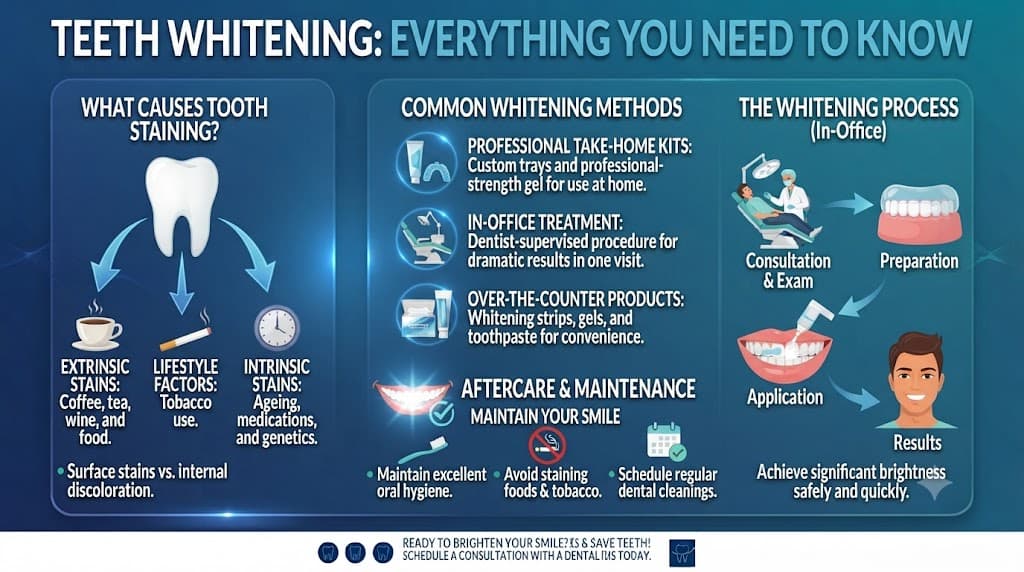
Teeth can become darker or stained for many different reasons. Common causes include:
- Coffee, tea, and other dark-coloured beverages
- Certain foods and sauces
- Smoking and tobacco use
- Natural ageing
- Poor oral hygiene
- Certain medications or dental conditions
Not all types of discolouration respond equally to whitening. A dental examination can help determine the cause of staining and whether whitening is likely to provide the desired result.
Professional Teeth Whitening
Professional teeth whitening is performed or supervised by a dental professional. Depending on your needs, your dentist may recommend an in-clinic whitening procedure or a professionally provided take-home whitening system.
Professional treatment allows your dentist to assess your oral health first and select an appropriate whitening approach. It can also help ensure that existing dental problems, such as untreated cavities or gum problems, are addressed before cosmetic treatment.
Is Teeth Whitening Safe?
When performed or recommended appropriately by a dental professional, teeth whitening is generally considered a safe cosmetic treatment. However, some people may experience temporary tooth sensitivity or gum irritation.
Your dentist can advise you about the most suitable whitening method and how to manage possible sensitivity. Whitening should not be used as a substitute for treating cavities, gum disease, or other dental problems.
How Long Do Whitening Results Last?
Teeth whitening results are not permanent. Over time, teeth can gradually become stained again, particularly if you frequently consume staining foods and drinks or use tobacco products.
Maintaining good oral hygiene, attending regular dental checkups, and following your dentist's advice can help maintain your results for longer.
What About Whitening Toothpaste?
Whitening toothpastes can help remove some surface stains through their cleaning action, but they generally do not provide the same level of whitening as professional bleaching treatments. They may be useful for maintaining a cleaner and brighter-looking smile as part of a regular oral hygiene routine.
Who Should Consider Teeth Whitening?
Teeth whitening may be suitable for adults who want to improve the appearance of naturally discoloured or stained teeth. However, whitening is not suitable for everyone, and the results can vary from person to person.
Existing crowns, veneers, fillings, and other dental restorations generally do not whiten in the same way as natural teeth. Your dentist can discuss how this may affect the overall appearance of your smile.
Final Thoughts
Teeth whitening can be an effective way to improve the appearance of stained or discoloured teeth and achieve a brighter-looking smile. The safest and most suitable approach depends on the condition of your teeth, the cause of discolouration, and your individual goals.
If you are considering teeth whitening, consult a qualified dental professional first. A proper dental assessment can help determine whether whitening is right for you and which treatment option may provide the best results.