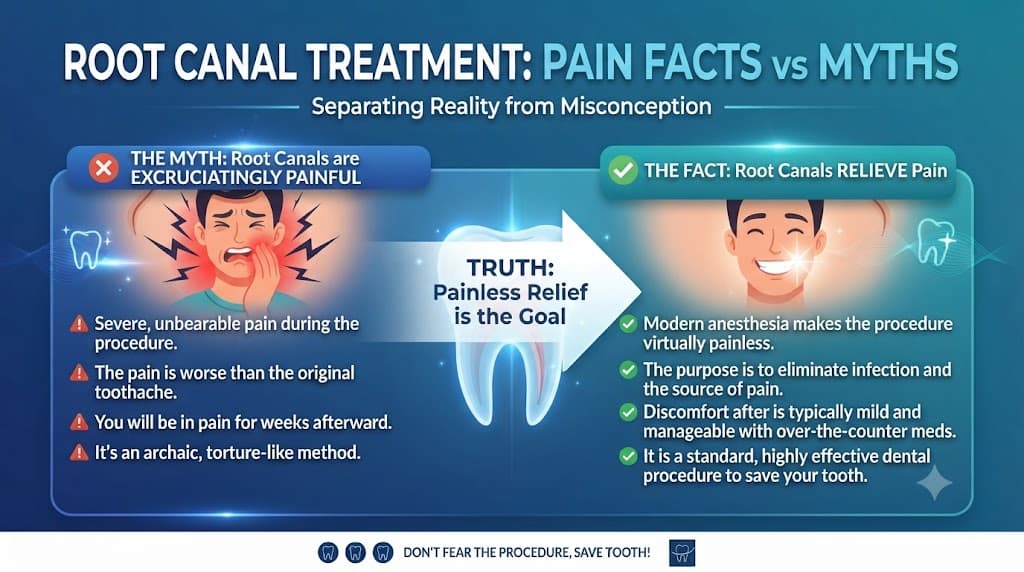
Is Root Canal Treatment Painful? Facts vs Myths
Root canal treatment is one of the most commonly misunderstood dental procedures. Many people avoid treatment because they believe a root canal is extremely painful. In reality, modern dental techniques and local anaesthesia have made root canal treatment much more comfortable than most people expect.
Understanding what actually happens during the procedure can help reduce anxiety and allow you to make an informed decision about your dental health.
What Is Root Canal Treatment?
A root canal is a dental procedure used to treat a tooth when the soft tissue inside it, known as the dental pulp, becomes inflamed or infected. This can happen because of deep tooth decay, cracks, repeated dental procedures, or an injury.
During treatment, the dentist removes the infected or damaged pulp, carefully cleans and disinfects the root canals, and seals the tooth. A crown may then be recommended to protect the treated tooth and restore its function.
Myth 1: Root Canal Treatment Is Extremely Painful
Myth. The reputation of root canal treatment being extremely painful largely comes from older dental experiences. Today, dentists use local anaesthesia to numb the affected area before treatment.
You may feel some pressure or movement during the procedure, but you should not normally feel significant pain while the tooth is numb. If you experience discomfort during treatment, inform your dentist so additional anaesthesia can be considered.
Myth 2: The Root Canal Causes Pain
Myth. In many cases, the pain associated with a tooth requiring a root canal is caused by the underlying infection or inflammation, not by the treatment itself.
Root canal treatment is intended to remove the source of infection and preserve the natural tooth. Treating the problem early may help prevent it from becoming more serious.
Myth 3: Recovery Is Very Painful
Usually a myth. It is possible to experience some tenderness or sensitivity after a root canal, particularly when biting or chewing. This discomfort is generally temporary and should gradually improve.
Your dentist may recommend appropriate pain-relief measures based on your individual situation. Following your dentist's instructions and avoiding unnecessary pressure on the treated tooth can also support recovery.
What Happens During a Root Canal?
- Examination: Your dentist examines the tooth and may take dental X-rays to understand the extent of the problem.
- Numbing: Local anaesthesia is used to numb the tooth and surrounding area.
- Cleaning: The damaged or infected pulp is removed and the root canals are cleaned.
- Sealing: The cleaned canals are filled and sealed to help prevent further infection.
- Restoration: A filling or dental crown may be placed to restore and protect the tooth.
When Should You See a Dentist?
Persistent toothache should not be ignored. Other warning signs can include sensitivity to hot or cold, pain while chewing, swelling around the tooth, a damaged or cracked tooth, or changes in the colour of the tooth.
If you experience severe or persistent dental pain, consult a qualified dentist for an examination. Early diagnosis can help determine the appropriate treatment and prevent the problem from progressing.
Final Thoughts
Root canal treatment does not have to be the frightening experience many people imagine. With modern dental techniques and effective local anaesthesia, the procedure can generally be performed comfortably. The goal is to remove infection, relieve symptoms, and preserve your natural tooth whenever possible.
Don't let fear stop you from seeking dental care. If you are experiencing persistent tooth pain or sensitivity, schedule a dental consultation to understand the cause and discuss the most appropriate treatment for your tooth.