How Often Should You Visit the Dentist?
Regular dental visits are an important part of maintaining a healthy smile. Even if your teeth feel fine, routine checkups can help identify problems such as cavities, gum disease, and other oral health concerns before they become more serious. But how often should you actually visit your dentist?
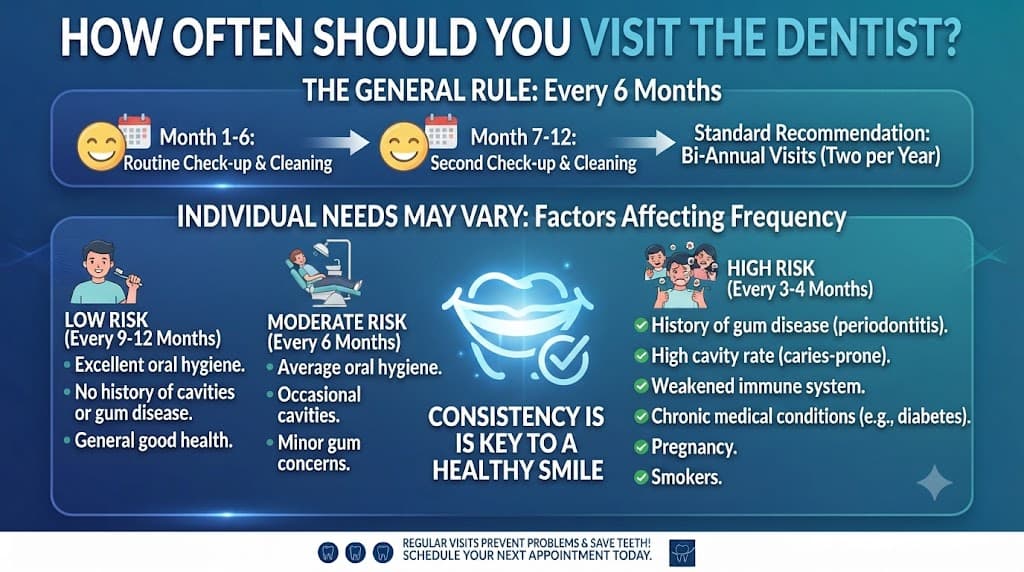
There is no single schedule that works for everyone. Your ideal dental visit frequency depends on your oral health, dental history, risk factors, age, and individual needs. The American Dental Association recommends working with your dentist to determine a personalized schedule. :contentReference[oaicite:0]{index=0}
How Often Should You Have a Dental Checkup?
For many people, visiting the dentist once or twice a year may be appropriate. The Indian Dental Association also notes that two checkups per year are sufficient for many people, although patients with specific problems or higher risk may need more frequent appointments. :contentReference[oaicite:1]{index=1}
Your dentist may recommend a different interval depending on your individual oral health. Some patients may benefit from visits every few months, while others may require less frequent preventive appointments.
Why Are Regular Dental Visits Important?
Dental checkups are not just about cleaning your teeth. Regular visits allow your dentist to monitor your teeth and gums and identify potential problems at an early stage. Early detection can often make treatment simpler and help prevent problems from becoming more advanced. :contentReference[oaicite:2]{index=2}
- Detection of cavities and tooth decay
- Monitoring gum health
- Professional cleaning when required
- Identification of dental problems at an early stage
- Personalized oral hygiene advice
Who May Need More Frequent Dental Visits?
Some people have a higher risk of developing dental or gum problems and may need more frequent professional monitoring. This can include people with a history of cavities, gum disease, or other ongoing oral health concerns.
For example, patients who have been treated for periodontitis may require supportive periodontal care at intervals such as every 3 to 6 months, depending on their condition and dentist's recommendations. :contentReference[oaicite:3]{index=3}
Don't Wait Until You Have Tooth Pain
One common mistake is visiting the dentist only when something hurts. However, some dental problems may develop without obvious symptoms in their early stages. Regular preventive appointments can help your dentist detect concerns before they cause significant discomfort.
You should also contact your dentist sooner if you experience symptoms such as tooth sensitivity, swollen or bleeding gums, persistent tooth pain, or other changes in your mouth. :contentReference[oaicite:4]{index=4}
What Can You Do Between Dental Visits?
Regular professional checkups are only one part of maintaining good oral health. Your daily habits also play an important role.
- Brush your teeth twice a day with fluoride toothpaste.
- Clean between your teeth daily.
- Limit sugary foods and drinks.
- Replace your toothbrush every three to four months or sooner if the bristles become worn.
- Follow the personalized advice provided by your dentist.
The ADA recommends brushing twice daily with fluoride toothpaste and cleaning between your teeth daily as part of a complete oral care routine. :contentReference[oaicite:5]{index=5}
Final Thoughts
There is no universal dental appointment schedule. For many people, one or two visits a year may be appropriate, while others may need more frequent care. Your dentist can assess your oral health and recommend a schedule that suits your individual needs.
Don't wait for dental pain to remind you about your oral health. Regular dental checkups and good daily oral hygiene can help you maintain a healthy smile for years to come.